
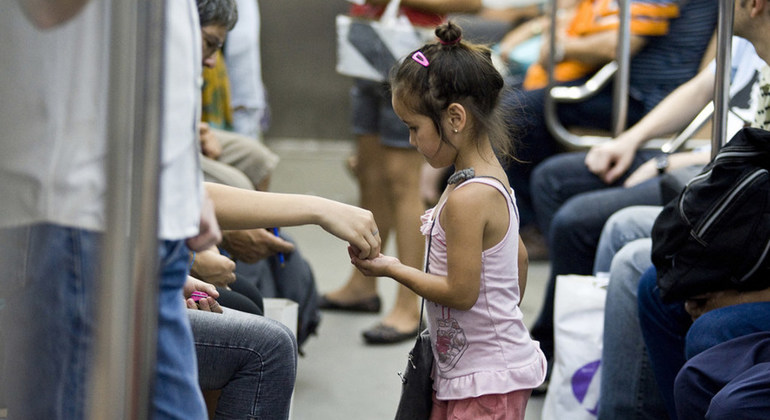
Inequality is an “entrenched imbalance”
The question of inequality was raised several times by the UN in January: speaking at the World Economic Forum Annual Meeting in Davos, UN chief António Guterres pointed out that, while technological progress and globalization have led to “fantastic improvements” in many areas, they have also increased inequality and marginalized millions.
And, in her annual letter, Lise Kingo, CEO of the UN Global Compact, which supports private sector efforts to do business responsibly, noted that, in 2018, we saw “a small group of individuals are getting exponentially richer as billions are left behind in poverty.”
Inequality is not only rising, it is also an “entrenched imbalance,” according to Richard Kozul-Wright, a globalization expert and Director with the Trade and Development agency UNCTAD.
In an interview with UN News, which you can listen to here, Mr. Kozul-Wright said that notionally high employment rates in many economies mask the fact that wages and working conditions are not improving, and that whilst wages have been stagnant for a decade, dividends on shareholdings have been recovering, benefiting financial asset holders. His remarks came in the wake of the January launch of the 2019 World Economic Situation and Prospects (WESP) report which showed uneven growth (both between and within countries) that is often failing to reach where it is most needed.
Will AI take away our jobs, or transform them?
NASA/Aubrey Gemignani
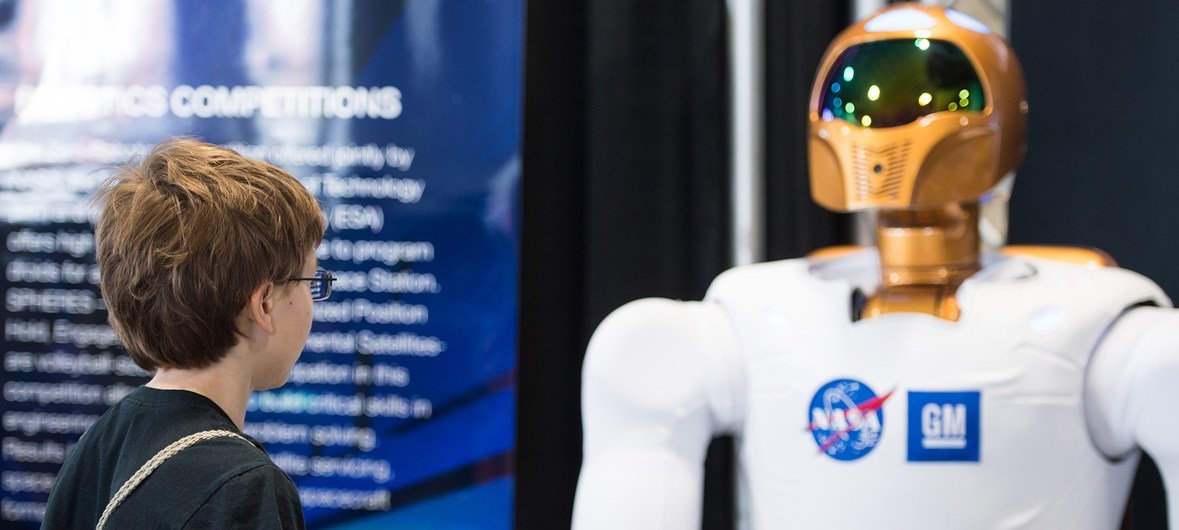
NASA’s first dexterous humanoid robot, Robonaut 2
The beginning of 2019 saw a focus on the role of technology on the world of work, and the impact it is having on inequality. The International Labour Organization (ILO) launched a landmark report in January: the Global Commission on the Future of Work. This study concluded that technological innovations provide “countless opportunities” for workers, but warned that, if these technologies are not deployed as part of a human-centred agenda based on investing in people, work institutions and decent, sustainable employment, we run the risk of “sleepwalking into a world that widens existing inequalities and uncertainties.”
One of the key technological innovations mentioned in the report, one that garners significant media attention, is artificial intelligence (AI). A report from the World Intellectual Property Organization (WIPO), published at the tail-end of January, noted a “quantum leap” in AI-related patents, suggesting that AI could soon “revolutionize all areas of daily life beyond the tech world.”
AI inspires as much fear as excitement, evoking a dystopian world in which more and more work is carried out by machines, with society split between a tiny super-rich elite and the rest, an unemployable mass of people with no prospect of finding work.
Kriti Sharma doesn’t see things that way. She has been recognized by the UN as a Young Leader For Sustainable Development Goals, in recognition of her work to ensure that AI helps to create a better, fairer world, through her AI For Good organization, and her role in the Sage Future Makers Lab, which was set up to equip young people around the world with hands-on learning for entering a career in Artificial Intelligence.
UN Sustainable Development Section
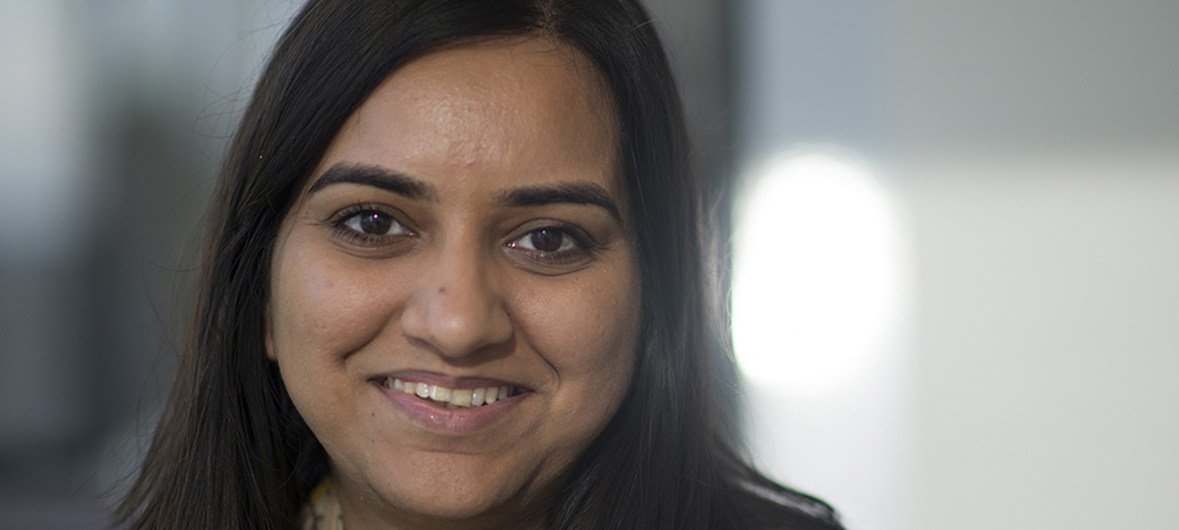
Kriti Sharma, United Nations Young Leader for the Sustainable Development Goals.
Speaking to UN News, Ms. Sharma acknowledged that people who live in countries which are on the wrong side of the digital divide (with less access to data) will be at a disadvantage, and pointed to studies that show a gender divide is looming, with women twice as likely to lose their jobs to automation, because of the kind of work they are involved in: “We need to make sure that we give people enough opportunities to reskill themselves, otherwise we end up creating more inequality that we had before.”
However, she believes that one of the biggest risks is failing to embrace this technology, and not equipping people with the skills to use it to solve global problems. Ms. Sharma laid out three ways to help ensure that AI brings about a fairer world.
First of all, it is important that a diverse group of people from many backgrounds are creating this technology, people who “understand society, policy-makers.” The second point is to ensure that AI is being used to solve the “right problems,” such as accelerating the Sustainable Development Goals, by diverting energy, research and funding into this area. And, lastly, international standards must be agreed upon, to make sure that the technology we create is used in a way that is safe and ethical for the world.
No progress without international cooperation
So, what is the way out of the “entrenched imbalance” of inequality? For the UN, a greater emphasis on international cooperation is an important part of the solution. The 2019 World Economic Situation and Prospects report concludes that, at a global level, a “cooperative and long-term strategy for global policy” is the way towards progress in reducing income inequality, and warns that a “withdrawal from multilateralism will pose further setbacks for those already being left behind.”
As the Secretary-General told the audience in Davos, a coordinated and global response is the only way to fight inequality, because “we need to work together. There is no way we can do isolated responses to the problems we face, they are all interlinked.”