
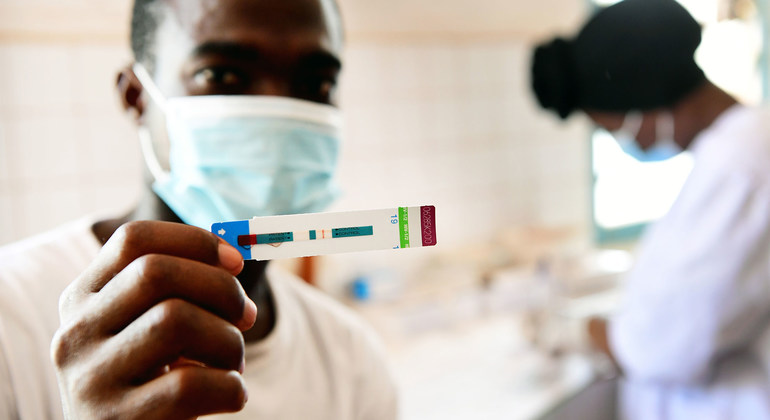
Despite action and progress against HIV in some places and population groups, HIV epidemics continue to expand in others, the report revealed. It was launched just weeks ahead of a major UN General Assembly meeting on AIDS.
“It is imperative to break out of an increasingly costly and unsustainable cycle of achieving some progress against HIV but ultimately not enough to bring about an end to the pandemic”, the Secretary-General said in the report.
“Inequalities are the key reason why the 2020 global targets were missed. By ending inequalities, transformative outcomes can be achieved for people living with HIV, communities and countries.”
New infections triple
In 2016, the UN General Assembly set the target of having fewer than 500,000 new HIV infections by 2020. Last year, the figure was 1.7 million, or three times the target. Similarly, the 690,000 AIDS-related deaths in 2019 far exceed the goal of less than 500,000 deaths a year.
“Ending AIDS as a public health threat by 2030 is still within reach—many countries are showing that rapid progress against HIV is possible when evidence-informed strategies and human rights-based approaches are adopted”, said Winnie Byanyima, Executive Director of UNAIDS, which is leading the global fight against the disease.
“But it requires bold political leadership to challenge and address the social injustices and inequalities that continue to make certain groups of people and entire communities highly vulnerable to HIV infection.”
Address inequalities, prioritize prevention
The report underscores that addressing social and structural factors that perpetuate inequalities is key.
For example, gender inequality, anchored by harmful gender norms, restricts women’s use of HIV services, and sexual and reproductive health services. This can impact decision-making, including the ability to refuse unwanted sex or to negotiate safer sex.
Vulnerable, marginalized and criminalized communities also remain at higher risk of HIV infection because they are not receiving essential information and HIV services, whether for prevention or care. These groups include gay men and other men who have sex with men, people who use drugs, sex workers, transgender people, prisoners and migrants.
Get back on track
The 10 recommendations for putting the world back on the path to ending AIDS cover issues such as addressing inequalities and reaching all people at risk of HIV infection.
The goal is to keep new infections to under 370,000, and AIDS-related deaths to under 250,000, by 2025.
They call for closing gaps in HIV testing and treatment, and putting “gender equality and the human rights of women and girls in all their diversity” at the centre of efforts to mitigate risk.
Other steps call for prioritizing HIV prevention to ensure that 95 per cent of people at risk have prevention options by 2025, and eliminating new infections among children.
Lessons in preparedness
The report also outlined how the COVID-19 pandemic has exposed social inequalities and health system weaknesses.
The Secretary-General said the world should leverage experience from responding to the AIDS crisis to strengthen health systems and improve pandemic preparedness.
He also appealed for more global solidarity, including to increase annual HIV investments in low and middle-income countries to $29 billion by 2025.

