
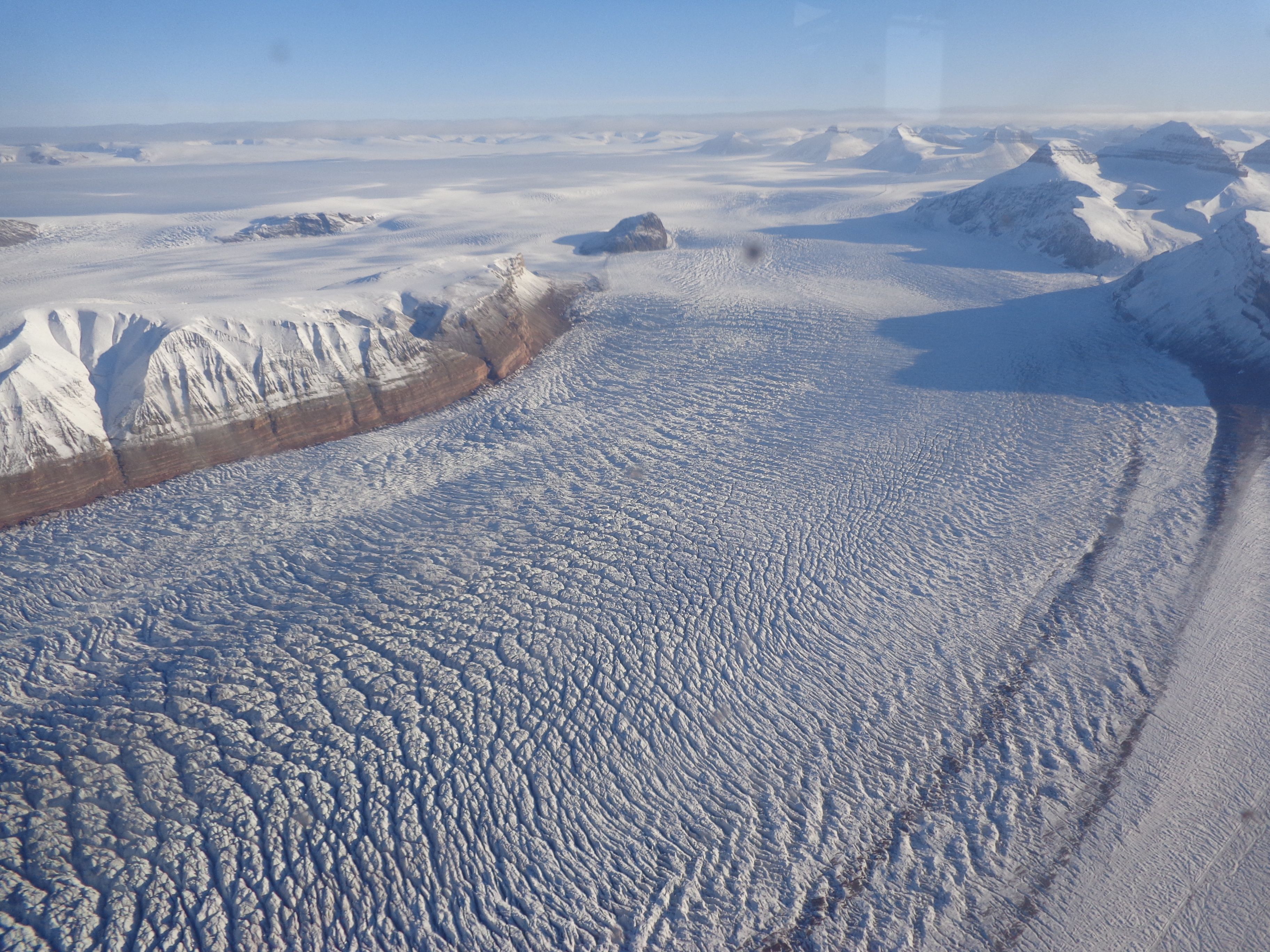
The Kronebreen glacier is located on the western side of Svalbard, an Arctic archipelago located halfway between Norway and the North Pole. This fast-flowing tidal glacier moves as much as a football field forward every two weeks, traversing a narrow fjord down to the ocean. Sometimes the leading edge breaks off in huge ice sheets as it interacts with saltier seawater, a process known as glacial calving.
Melting Ice Changing Oceans
These movements make the Kronebreen interesting to researchers who want to know how melting Arctic ice may be changing our oceans. It also makes the glacier too dangerous for them to work on.
“It would simply be too dangerous to go into such a hostile and remote environment with a boat. Not only is there a risk of falling ice, but large-scale calving causes huge waves, so it is a dangerous place,” said Professor Finlo Cottier of the Scottish Association for Marine Science (SAMS).
But recently a collaboration between SAMS, the University Center in Svalbard, the Norwegian Polar Institute, and UiT The Arctic University of Norway circumvented that issue with technology. The researchers used autonomous drones to measure glacial changes from above and below the glacier, as well as directly in the path of possible calving events. An aerial drone was used to photograph freshwater runoff on the surface as a small, low-cost autonomous submarine drone worked below the glacier to measure temperature, oxygen readings, and salinity levels. Meanwhile, researchers used an autonomous surface vehicle (ASV) to take oceanic measurements at the glacier’s edge.
Robots Offer Crucial Data
Marine robotics collected crucial data that will help answer questions about how freshwater affects glacial melt. This data will also help answer the overriding question of how much freshwater is introduced into the ocean through the melting process. This is important because meltwater dilutes and changes the ocean’s alkalinity. This, in turn, may cause changes in PH that can negatively affect marine life. Meanwhile, the team remained out of harms’ way thanks to technology. Drones are integrating into more and more industries, including manufacturing, healthcare, and agriculture.
As global temperatures increase, glaciers are now breaking up from several points. Meltwater flowing downward through the glacial fractures causes a process known as subglacial discharge. Cold, fresh meltwater discharged from the bottom of the glacier creates a plume of warmer seawater around the glacier’s base, accelerating its melt rate. Underwater robotics like those deployed by the team will advance our understanding of this phenomenon.
Marine Robots Changing Industries
In recent years, the use of marine robotics has increased rapidly. Improved machine learning and deep learning architectures allow these technologies to roam further and more accurately inspect, identify, and monitor the world under the water’s surface. Expanded use is expected in several maritime industries, as well as in renewable energy, mining, and search and rescue.