
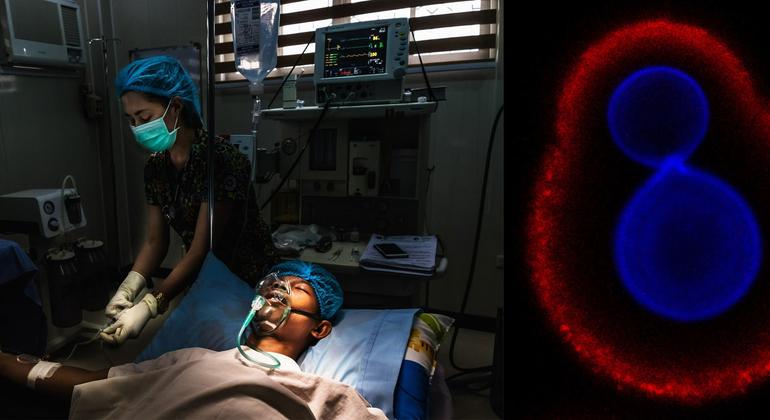
If not, then look no further than the UN World Health Organization (WHO), which has just catalogued the 19 fungi that represent the greatest public health risk today.
The aim of listing these fungal “priority pathogens” is to promote research and strengthen our response to fungal infections and antifungal resistance.
People most at risk are those with underlying health problems or a weakened immune system, WHO said.
And just how important the issue is, was demonstrated during the COVID-19 pandemic, when invasive fungal infections increased significantly among hospitalized patients, “often with devastating consequences”.
“New groups at risk of invasive fungal disease are constantly being identified,” WHO warned on Tuesday. “As the fungi that cause common infections – such as candida oral and vaginal thrush – become increasingly resistant to treatment, risks for the development of more invasive forms of infections in the general population are also growing.”
Growing public health concern
There are only four types of antifungal medicine available today, which is a problem, as fungal infections are becoming more common and resistant to treatment.
Even more worrying is the fact that “most fungal pathogens lack rapid and sensitive diagnostics, and those (medicines) that exist are not widely available or affordable globally”, WHO said.
People at greatest risk from invasive fungal infections include those with cancer, HIV or AIDS, organ transplants, chronic respiratory disease and tuberculosis.
Latest data shared by WHO indicates that fungal diseases are expanding in number and reach worldwide. Global warming and the increase of international travel and trade are believed to be responsible, the UN health agency said.
To give an idea of the scale of the potential threat posed by fungal infections, WHO noted that drug-resistant bacterial infections already “directly cause 1.27 million deaths and…contribute to approximately 4.95 million deaths every year”.
Step up surveillance
Among its top recommendations to countries seeking to tackle fungal disease, WHO urged the strengthening of laboratory and surveillance capacities, to better understand the burden of infection and antifungal resistance.
“Resistance to antifungal medicines is partly driven by inappropriate antifungal use,” WHO said, noting that the ill-judged use of antifungals in agriculture had been linked to rising infections of a common mould that has the capacity to spread, Aspergillus fumigatus.
The UN health agency’s catalogue focuses on fungal pathogens that can cause “invasive acute and subacute systemic fungal infections” which have proved resistant to medication.
The pathogens are ranked and listed in three priority groups: critical, high and medium. The critical group includes Cryptococcus neoformans, Candida auris, Aspergillus fumigatus and Candida albicans.
The high group includes Nakaseomyces glabrata (Candida glabrata), Histoplasma spp., eumycetoma causative agents, Mucorales, Fusarium spp., Candida tropicalis and Candida parapsilosis.
Pathogens in the medium group are Scedosporium spp., Lomentospora prolificans, Coccidioides spp., Pichia kudriavzeveii (Candida krusei), Cryptococcus gattii, Talaromyces marneffei, Pneumocystis jirovecii and Paracoccidioides spp.