
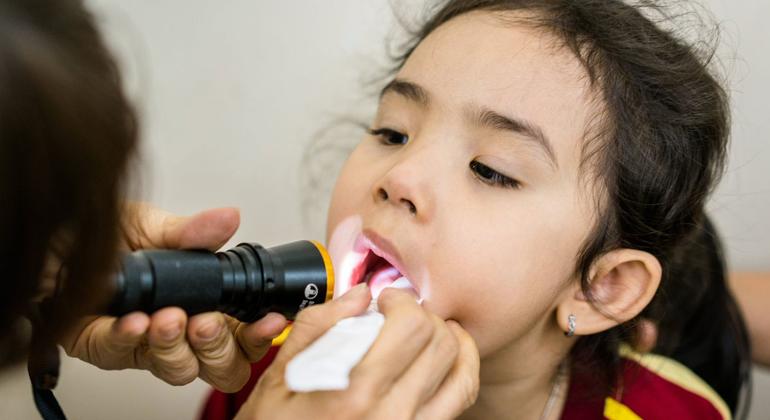
“Oral health has long been neglected in global health, but many oral diseases can be prevented and treated with the cost-effective measures outlined in this report,” said WHO Director-General, Dr Tedros Adhanom Ghebreyesus.
In a first-ever comprehensive overview, the Global Oral Health Status Report analysed key areas and markers throughout 194 countries, and shows that cases have increased by one billion over the last 30 years.
WHO says the main reason is many people do not have access to prevention and treatment.
One billion with severe gum disease
The most common oral diseases stem from dental cavities. Gum disease, tooth loss and oral cancers are among the most prevalent oral diseases, while tooth decay is the single most common condition around the world, affecting an estimated 2.5 billion people.
Severe gum disease, a major cause of total tooth loss, is estimated to affect one billion people worldwide and about 380,000 new cases of oral cancers are diagnosed every year.
Glaring inequalities
The report highlights unequal access to oral health services, with vulnerable and disadvantaged populations most affected.
People on low incomes and with disabilities; older individuals living alone or in care facilities; those in remote and rural communities; and people from minority groups, carry a higher burden of oral diseases, according to WHO.
From cardiovascular diseases to diabetes and mental disorders, the pattern of inequality parallels other noncommunicable diseases (NCDs).
And risk factors common to NCDs such as high sugar intake, tobacco, and alcohol also contribute to the global oral health crisis.
“WHO is committed to providing guidance and support to countries so that all people, wherever they live and whatever their income, have the knowledge and tools needed to look after their teeth and mouths, and to access services for prevention and care when they need them”, Tedros assured.
Barriers to services
Only a small percentage of the global population is covered by essential oral health services, and those with the greatest need often have the least access.
The report outlines key barriers to oral health services, including high out-of-pocket expenditures, which often leads to catastrophic costs and financial burden for families and communities.
Additionally, highly specialized providers use expensive high-tech equipment and these services are not integrated with primary health care models.
Moreover, poor information and surveillance systems, combined with low priority for oral health research, are bottlenecks to developing more effective interventions and policies.
Changing the trajectory
However, opportunities for improved global oral health include adopting a public health approach by addressing common risk factors.
These involve promoting a well-balanced diet low in sugars, stopping tobacco use, reducing alcohol consumption, and improving access to fluoride toothpaste.
Other solutions outlined in the report support making oral health part of national health services; redefining oral health workforces to respond to population needs; expanding oral health service coverage; and collecting and integrating oral health data into national health monitoring systems.
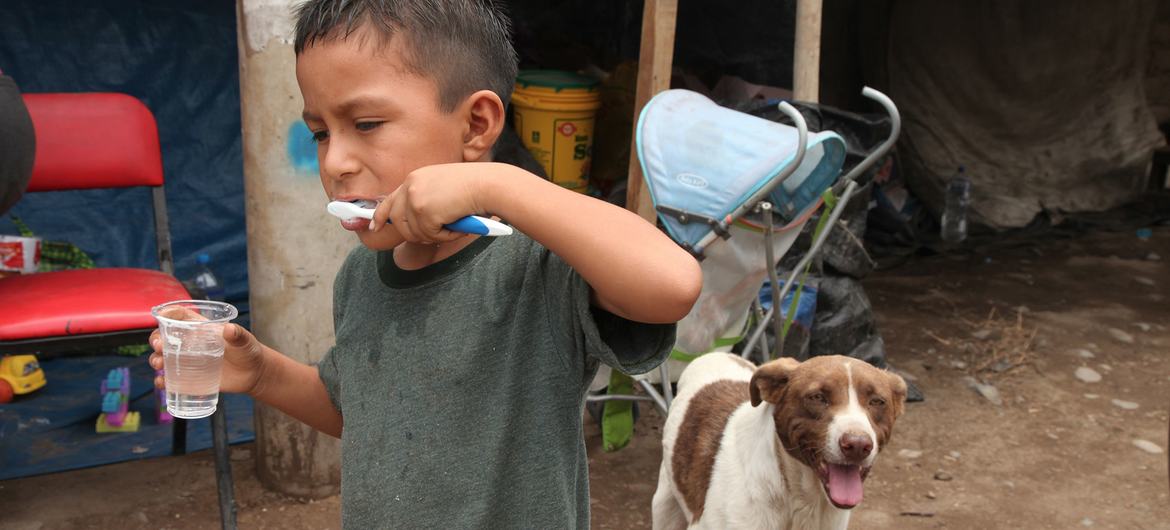
A displaced boy, whose home was destroyed by floods, brushes his teeth outside a temporary shelter in Lima, Peru.
Achieving the vision
Placing people at the heart of oral health services is critical “to achieve the vision of universal health coverage for all individuals and communities by 2030”, said Bente Mikkelsen, WHO Director for Noncommunicable Diseases.
By providing baseline information to help countries monitor implementation progress along with timely and relevant feedback to national decision-makers, she described the report as “a starting point”.
“Together, we can change the current situation of oral health neglect”.
Achieving the vision
Placing people at the heart of oral health services is critical “to achieve the vision of universal health coverage for all individuals and communities by 2030”, said Bente Mikkelsen, WHO Director for Noncommunicable Diseases.
By providing baseline information to help countries monitor implementation progress along with timely and relevant feedback to national decision-makers, she described the report as “a starting point”.
“Together, we can change the current situation of oral health neglect”.