Earthquakes, hurricanes, volcanic activity and other natural disasters regularly cause destruction and the loss of life in parts of the Caribbean.
On the International Day for Disaster Risk Reduction marked annually on 13 October, UN Resident Coordinator for Barbados and the Eastern Caribbean, Didier Trebucq and Nahuel Arenas, regional chief of the UN Office for Disaster Risk Reduction (UNDRR) consider the connection between disasters and inequality.
“In the Caribbean, we share a deep understanding of the intricate link between disasters and inequality. It’s a narrative of uneven access to crucial resources, leaving the most vulnerable exposed to the impacts of disasters. When disasters strike, they disproportionately affect marginalized communities, exacerbating existing inequalities and pushing them deeper into poverty.
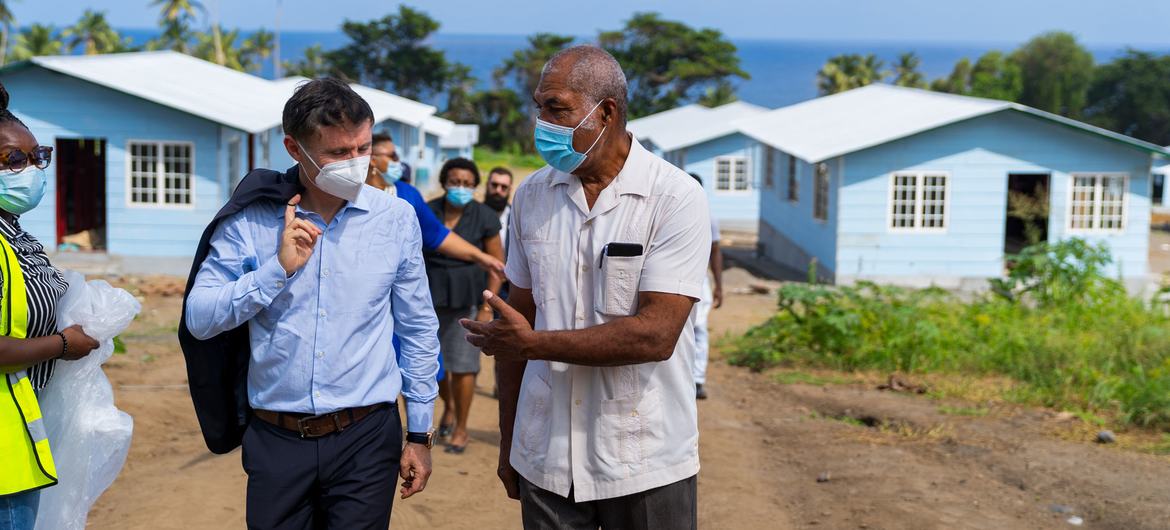
UN Resident Coordinator for Barbados and the Eastern Caribbean, Didier Trebucq (left) visits St. Vincent and the Grenadines six months after the volcanic eruption.
Fighting inequality is critical to build a stronger and safer future for everyone.
Interconnected challenges
The region faces a range of challenges today—economic uncertainties, widening disparities, supply chain disruptions, energy shortages, price surges, and inflation—all of which cast shadows on economies and livelihoods and worsens the impact of disasters. According to the UNDRR’s Global Assessment Report on Disaster Risk Reduction, globally disasters will push an additional 100.7 million people into poverty by 2030 and an estimated 37.6 million more people will be living in conditions of extreme poverty due to the impacts of climate change.
Recent research paints a stark picture: the poorest bear the heaviest burden when disasters strike. For instance, the deadliest recent disaster in the Caribbean, the Port-au-Prince Earthquake in 2010, impacted the poorest country of the region: Haiti; and its long-term impacts continue to be visible more than a decade later.
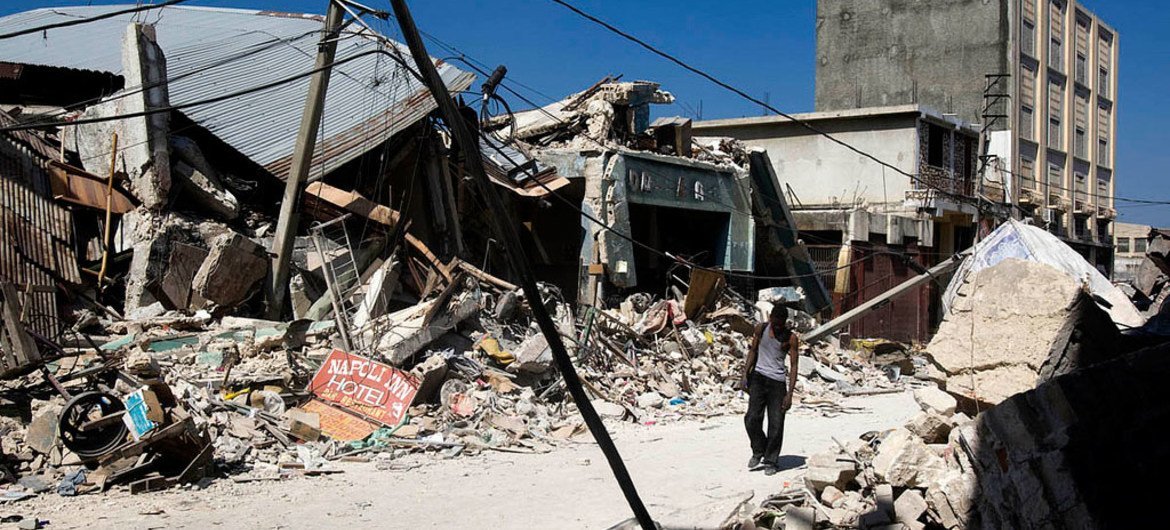
A man walks through the rubble of collapsed buildings in downtown Port au Prince, Haiti, following the earthquake in January 2010.
Between 1970 and 2019, a staggering 91 per cent of all deaths caused by weather, climate, and water hazards occurred in developing countries like the Caribbean. Similarly, the World Bank reports that 82 per cent of disaster-related deaths occurred in low and lower-middle-income countries.
Cycles of inequality
Approximately 75 per cent of extreme weather events are now linked to climate change, primarily fueled by carbon emissions. Ironically, those experiencing the most severe losses from disasters are often those who have contributed the least to the problem.
In essence, inequality acts as a conduit, transferring disaster risk from those who benefit from risk-taking to those who bear its costs.
Impoverished communities are more likely to reside in hazard-prone areas, lack the resources to invest in risk reduction measures, live in substandard and insecure housing, and have limited access to essential services such as healthcare, public transport, and basic infrastructure.
Specific populations, including women, children, and persons with disabilities, are disproportionately affected by disaster impacts. For example, studies reveal that women in the Caribbean region are less likely to receive official warnings about impending disasters than men. Similarly, during past disasters, persons with disabilities were often the most vulnerable.
Building resilience through early warning
At the UN Office in the Eastern Caribbean, we are rising to the challenge by prioritizing our commitments to the Sendai Framework and the Sustainable Development Goals (SDGs).
This entails a resolute reduction of poverty and inequality, alongside action against disaster risk and vulnerability. Our focus remains unwaveringly fixed on the most vulnerable communities, ensuring they receive the protection and support they deserve.
On a global scale, decision-makers are looking at revamping the financial architecture, aligning it to better serve the needs of the world’s most vulnerable countries. Economic resilience is critical for those most at risk from disasters, forming an indispensable component of our collective strategy to confront the challenges that lie ahead.
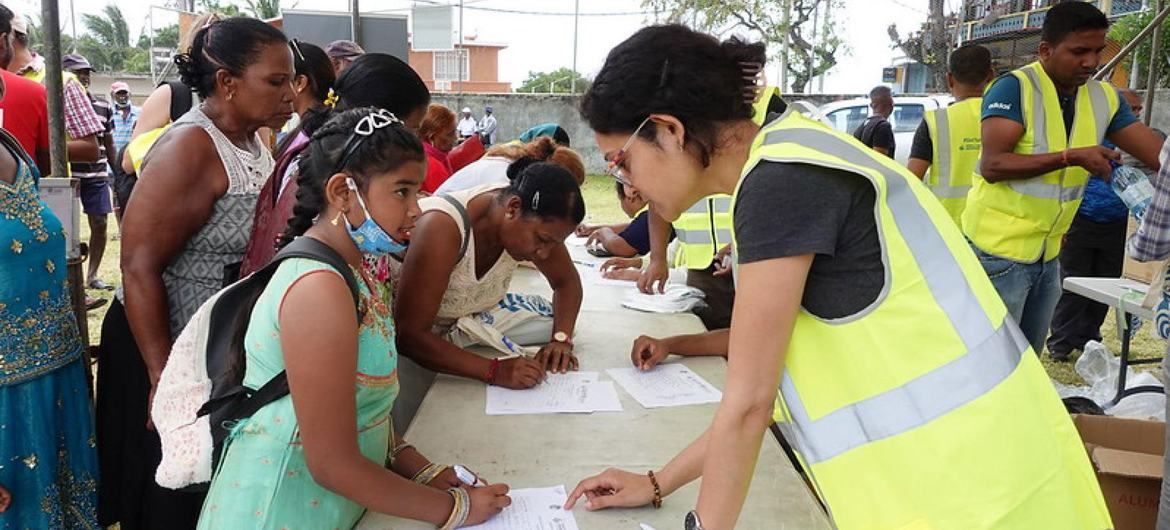
Disaster preparedness drills can help reduce the impact of disasters on communities.
Furthermore, the implementation of the Early Warnings for All initiative, including in Caribbean countries such as Barbados and Antigua and Barbuda, will help to ensure that every corner of the globe is covered by multi-hazard early warning systems within the next four years.
By prioritizing the most at-risk communities, we offer them the vital lifeline of preparedness and early warnings.
By engaging in disaster risk reduction, countries will bolster their capacity, and empower diverse groups in all decision-making processes. Women, the elderly, and persons living with disabilities should be at the forefront, and actively included in our efforts.
The presence of local, national and regional actors, including state and civil society organisations remains key to humanitarian and resilience effectiveness since local actors are often the first responders in an emergency.
As we commemorate this year’s International Day for Disaster Risk Reduction, let us recommit ourselves to this formidable challenge. Let us remember that in the face of disaster-induced inequality, we hold the power to reshape the future.
Together, we can break these chains, forging a path to resilience and equality for all, for a brighter Caribbean awaits.”
UN Resident Coordinator:
- The UN Resident Coordinator, sometimes called the RC, is the highest-ranking representative of the UN development system at the country level.
- In this occasional series, UN News is inviting RCs to blog on issues important to the UN and the country where they serve.
- Learn more about the UN’s work in in Barbados and the Eastern Caribbean here.
- Find out more about the UN Development Coordination Office here.