
The Trump administration is doubling down on efforts to revive the United States’ coal industry.
On Sept. 29, the U.S. Department of Energy announced $625 million in funding aimed at retrofitting and recommissioning aging coal plants to extend their lifespans. The same week, the Department of the Interior said it would open 13.1 million acres of federal land to coal mining, while the Environmental Protection Agency proposed weakening regulations meant to limit toxic water and air pollution from coal plants.
These are the latest in a series of maneuvers intended to shore up U.S. coal in the face of rising energy costs, reliability concerns and growing power demand (not least from new data centers).
Yet, coal is not an economical answer to energy security. Evidence shows that keeping old plants online is already costing utilities millions — costs that are passed onto ratepayers. While these plants might bolster power supply in the short term, they will ultimately drive up electricity bills, hurt Americans’ health and accelerate dangerous climate change.
The good news is that there are cleaner, more reliable sources available today that can meet the country’s rising demand more affordably.
Coal Has Declined as Cheaper, Cleaner Power Sources Emerged
Two decades ago, nearly half the United States’ electricity came from coal. Today, only about 15% does.
The single biggest reason for this shift is that other power sources became more competitive. Natural gas prices fell relative to coal as the U.S. ramped up shale gas production, making coal plants less economic. This helped accelerate momentum away from coal and toward natural gas around the early 2010s. Protective environmental and climate regulations have also made it more expensive to operate highly polluting coal plants.
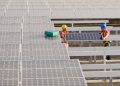
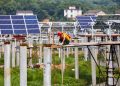
In tandem, plummeting renewable prices over the last decade and state policies encouraging adoption led to rapid clean energy deployment. Wind and solar overtook coal in the U.S. power mix for the first time in 2024, together contributing 17% of the country’s electricity compared to coal’s 15%.
Critically, these sources are not just cheaper than coal, but also cleaner and safer. Coal is the most carbon-intensive fossil fuel and emits toxic pollutants that can lead to lung disease and other health risks. One study attributed nearly half a million deaths in the U.S. between 1999 and 2020 to coal plant pollution.
Keeping Coal Plants Online Will Hike Electricity Bills
The federal government’s recent measures are aimed at recommissioning coal plants that have been taken offline and extending the life of existing plants. Similarly, an April executive order directed DOE to evaluate processes for using its emergency powers to improve grid reliability. As a result of this order, the agency has taken action to keep fossil fuel plants slated for retirement in operation, including the J.H. Campbell coal plant in Michigan and the Eddystone oil- and gas-burning plant in Pennsylvania.
These measures come at a steep price. With spending needed on retrofits and upgrades, the cost of coal power is rising as aging plants become more expensive to operate and maintain. This means that keeping old plants open can be costly. Consumers Energy — the majority owner of the J.H. Campbell power station that was ordered to remain online past its May 2025 retirement date — reported that it spent $29 million in the first 38 days of a DOE order to keep the plant open. At this rate, the cost to keep it running is estimated to be about $279 million a year.
Rising generation costs ultimately translate to higher rates for electricity customers, contributing to surging energy bills for U.S. households and businesses. One recent report estimates that efforts to prevent large fossil fuel power plants from retiring could cost ratepayers about $3.1 billion a year by the end of 2028.
There Are Better Ways to Meet US Power Demand
More coal is not the answer to today’s energy challenges. What the U.S. needs to keep prices down, meet rising demand and stay competitive on a global scale is: 1) to build wind, solar and batteries rapidly now, because they are the quickest to install and least expensive source of energy in many regions; and 2) to scale up clean, firm power — a variety of low-carbon sources, including next-generation geothermal, nuclear and hydropower, that can operate around the clock.
Investing in clean energy today makes good financial sense. The cost of building new renewables can be less than operating coal; indeed, research has shown that the majority of U.S. coal plants would be more expensive to continue running than to replace with local wind or solar. Scaling these sources will also be key to supporting the administration’s goal of “energy dominance” in a world that’s increasingly investing in renewables.
Despite current headwinds, including the early phase-out of key federal tax credits, U.S. wind and solar are still expected to grow in the coming years. In its latest energy infrastructure report, the Federal Energy Regulatory Commission forecasts that the U.S. will add 92.6 gigawatts (GW) of new solar and 22.6 GW of new wind between August 2025 and July 2028 — enough to power more than 25 million homes. It also forests that no new coal will be built over this period, while 25 GW of existing coal capacity and 13.7 GW of natural gas capacity are set to retire.
There are also opportunities to ramp up investment in clean power sources beyond wind and solar and to increase the efficiency of the grid. Technologies such as nuclear and advanced geothermal already benefit from bipartisan support in Congress and could potentially represent a significant percentage of the country’s future energy mix. In addition, new transmission technologies can help modernize the aging grid and increase its efficiency, helping to move more power along existing lines and accommodate rapidly growing demand.
Now is the time to make smart, forward-looking investments in energy that’s safe, affordable, reliable and abundant — rather than clinging to systems of the past that will raise costs for consumers.