
by Mathilde Bouyé and Yamide Dagnet, Contributors
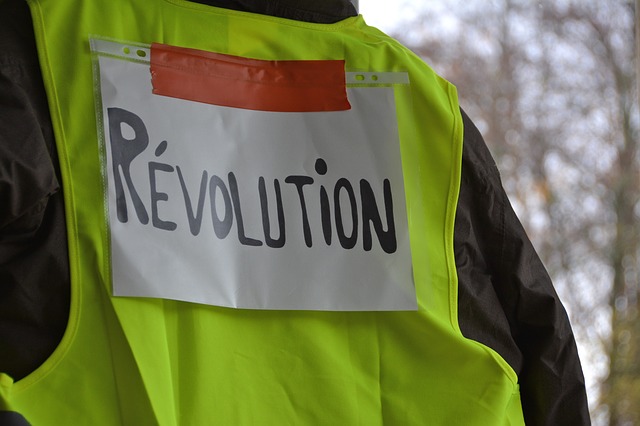
The Yellow Vests riots sweeping across France have grabbed headlines as governments gather in Katowice, Poland for the UN climate conference (COP24). This is the most widespread and violent protest in France since the 2005 suburban riots, and perhaps even 1968. While the unrest initially erupted as a protest against the latest rise in fuel taxes, which the government has now agreed to postpone, some are attributing the riots to a backlash against carbon taxes and climate action. This is a misguided conclusion.


The Yellow Vests’ chief concern is social inequity. Their demands go well beyond the suspension of fuel taxes, and many of them call for more ambitious and fair climate action. The movement is a reminder to governments that in a context of worsening social disparities, climate action cannot advance without ensuring benefits for all.
Yellow Vests Call for a Fair Transition to a Low-Carbon Economy
The Yellow Vests is an eclectic grassroots movement with no political or union representation and very diverse demands, ranging from finding a roof for all homeless people to raising the minimum wage to dissolving the parliament. Supported by 72 percent of the French population, according to a survey conducted by Harris Interactive, this protest shows deep distrust in politics and strong anger against a steady rise in inequalities. The clear message from the Yellow Vests’ 42 demands is about social justice, not stopping climate action.
In fact, a separate Yellow Vests’ communique highlights ecology as a top priority, and urges the government to “put in place a real ecological policy and not a few piecemeal fiscal measures.” The list of 42 demands includes proposals to make the climate transition fairer, and some demands call for even more ambitious climate action. The Yellow Vests are not against carbon pricing in general: They propose introducing fuel and kerosene taxes for ships and airplanes.
What the Yellow Vests’ proposals call for is more equitable fiscal policy. They note that the increase in fuel taxes comes after major tax cuts for high-income earners and would disproportionately affect the working and middle classes living in suburban and rural areas. There are also concerns that the revenue from fuel taxes would finance a controversial pro-business tax credit for employment and competitiveness (CICE), not a green transition.
In addition, the proposal asks for more alternatives to gasoline and diesel vehicles, calling for the maintenance of small rural train lines currently under threat of closure, as well as a massive investment plan in hydrogen vehicles. Other proposals for a fair climate transition include a large plan for housing insulation, presented as a win-win solution for climate and households’ budgets.
What is interesting is that France is the first country in the world to have a Ministry for the Ecological and Inclusive Transition. In addition, last year former Minister Nicolas Hulot adopt a “Climate Solidarity Package” of compensatory measures and bonuses to ensure that climate action benefits low-income households. What this shows is that planning a fair, low-carbon transition cutting across all policies is not easy, and requires engagement from the whole government.
Carbon Pricing Can Deliver Economic and Social Benefits
The Yellow Vests movement is a reminder of the importance of planning carbon pricing in the context of broader tax reform, in consistency with the principle of fiscal equity, which can involve indirecting revenues to low-income households through social policies or direct transfer.
Carbon taxes or cap-and-trade systems are now in place or planned in 70 jurisdictions worldwide, covering 20 percent of global emissions. Globally, carbon pricing raised around $33 billion in revenues in 2017, and, together with fossil fuel subsidy reform, could generate $2.8 trillion in 2030. Some countries have directed these new revenues in social priorities like public transport, education or health care, or have returned the revenues directly to households. These kinds of policies can deliver multiple benefits, including for low-income communities.
For instance, the British Columbian carbon tax has been in place for 10 years. In 2016, it generated $896 million. Some of these revenues were redirected to households through a climate tax credit of $75 per adult and $22 per child. The net result is that low-income households are better off than they would have been without the tax. The federal government is now requiring all provinces to adopt carbon pricing. It estimates that more than 70 percent of households will receive more money in rebates than they will spend on taxes.
Sustainable Mobility for All
Shifting to shared mobility and clean transport systems can also bring many economic, social and health benefits. But like carbon taxes, this will only happen if reforms are designed correctly. Electric or hydrogen cars need to be much more affordable for low-income households. While their costs have fallen dramatically in recent years and ownership has risen dramatically, governments should continue to focus on programs that will help support cost reductions and deployment of zero-emission vehicles..
Successful transformations also need to provide people with accessible alternatives to cars, like cycling and rail lines. In Germany, major investments in small rail lines increased train use, which has improved connectivity in rural areas and reduced congestion in suburbs.
What we are seeing in France highlights the fact that shifting to a low-carbon economy will only work if it improves people’s lives and instills confidence. Moving forward without leaving anyone behind is not easy, but it is essential.
This Op-Ed was originally published as a World Resources Institute blog and was reprinted with permission.