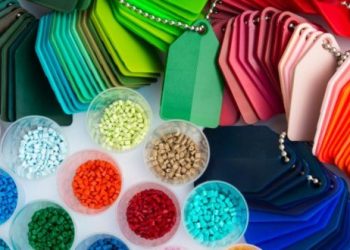
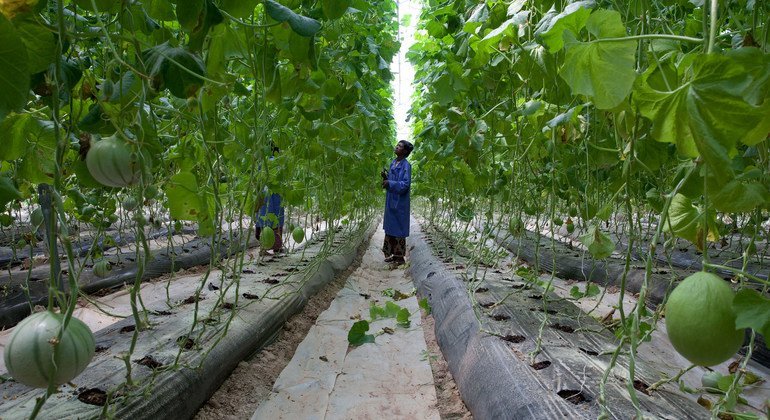
Plastics are used extensively in agriculture, from plastic-coated seeds to protective wraps used to modify soil temperature and prevent weed growth over crops.
These synthetic materials also added intentionally to biosolid fertilizer, which is spread on fields, and are used in irrigation tubes, sacks and bottles.
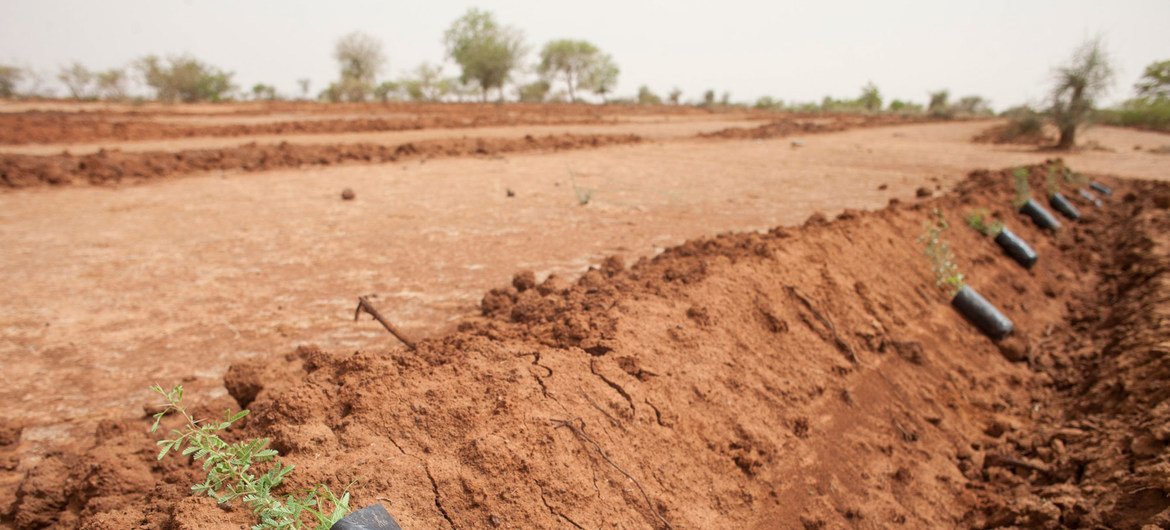
Plastic covered seedlings.
Biodiversity, health impacts
While all these products have helped increase crop yields, there is growing evidence that degraded plastics are contaminating the soil and impacting biodiversity and soil health, the report warns.
Moreover, microplastics, such as the one used in some fertilizers, are also impacting human health when transferred to people through the food chain.
“There is only a finite amount of agricultural land available,” said report’s co-author Professor Elaine Baker from the University of Sydney. “We are starting to understand that the build-up of plastic can have wide-ranging impacts on soil health, biodiversity and productivity, all of which are vital for food security”.
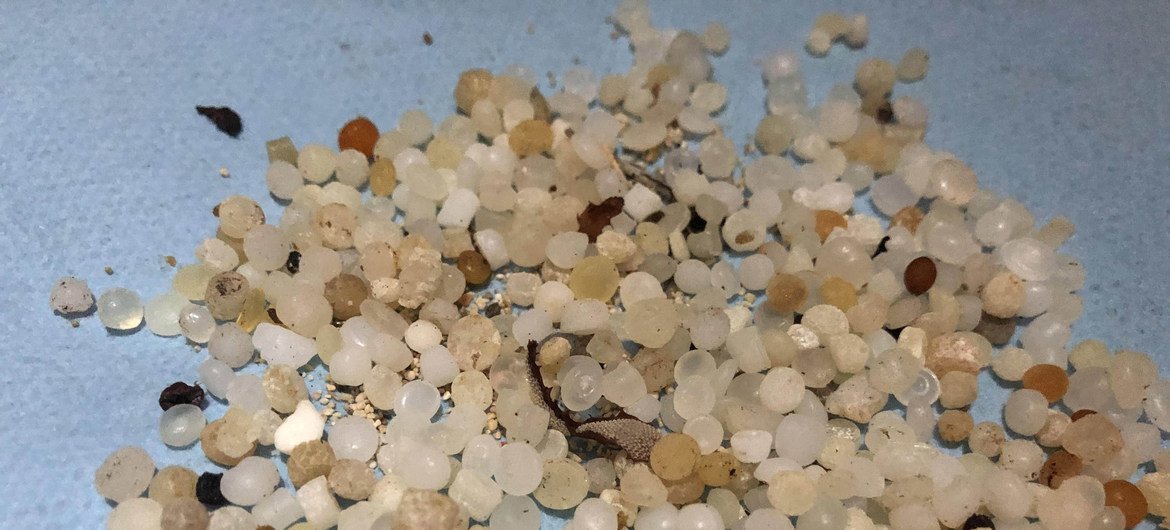
Microplastics come in a large variety of sizes, colours and chemical compositions, and include fibres, fragments, pellets, flakes, sheets or foams.
Everything’s affected by plastic
UNEP’s experts explain that over time, big pieces of plastic can break into shards less than 5 mm long and seep into the soil.
These microplastics can change the physical structure of the earth underfoot and limit its capacity to hold water. They also can affect plants by reducing root growth and nutrient uptake.
Currently the single-biggest source of microplastic pollution in soil, is fertilizers produced from organic matter such as manure.
Although these can be cheaper and better for the environment that manufactured fertilizers, the manure is mixed with the same plastic microspheres that are known to be commonly used in certain soaps, shampoos, and makeup products.
While some countries have banned these microspheres, other microplastics continue to enter our water systems via discarded cigarette filters, tire components, and synthetic clothing fibres.
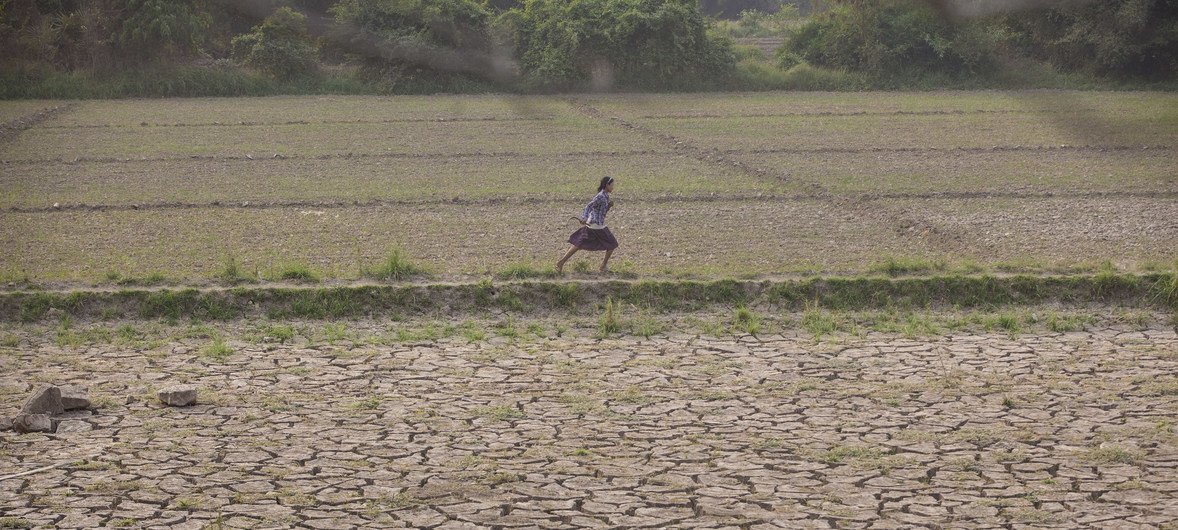
A girl runs through deserted farmland in Mynmar’s Sagaing region.
What to do?
The report highlights that progress is being made to improve the biodegradability of polymers used in agricultural products.
However, some protective films – used to prevent moisture loss – are now being marketed as fully biodegradable and compostable, which is not always the case.
Bio-based polymers are not necessarily biodegradable, some may be as toxic as fossil fuel-based polymers, and their price is still an issue.
A solution proposed by the report authors are the so-called ‘cover crops’, which shield the soil and are not meant to be harvested.
These nature-based solutions can suppress weeds, counter soil diseases and improve soil fertility, but there are concerns they could reduce yields and increase costs, UNEP warns.
“None of these solutions are a magic bullet. Plastic is inexpensive and easy to work with, which makes trying to introduce alternatives a hard sell”, Ms. Baker explained.
However, the expert recommends governments to disincentivize” the use of agricultural plastics, following the path of the European Union, which earlier this year restricted certain types of polymers from being used in fertilizer.
“Now is the time to adopt the precautionary principle and develop targeted solutions for stopping the flow of plastic from the source and into the environment”, the Australian scientist underscored.