
Water is crucial to rice farmers and when it is lacking, they tend to rely on groundwater.
Globally, water taken from underground reservoirs supports 40 per cent of agriculture, but if groundwater levels fall, it becomes harder to reach over time.
In Punjab known by some as India’s breadbasket, groundwater is being depleted faster than it is being replenished.
Three farmers from Punjab explain how they experience water scarcity and how they deal with it.
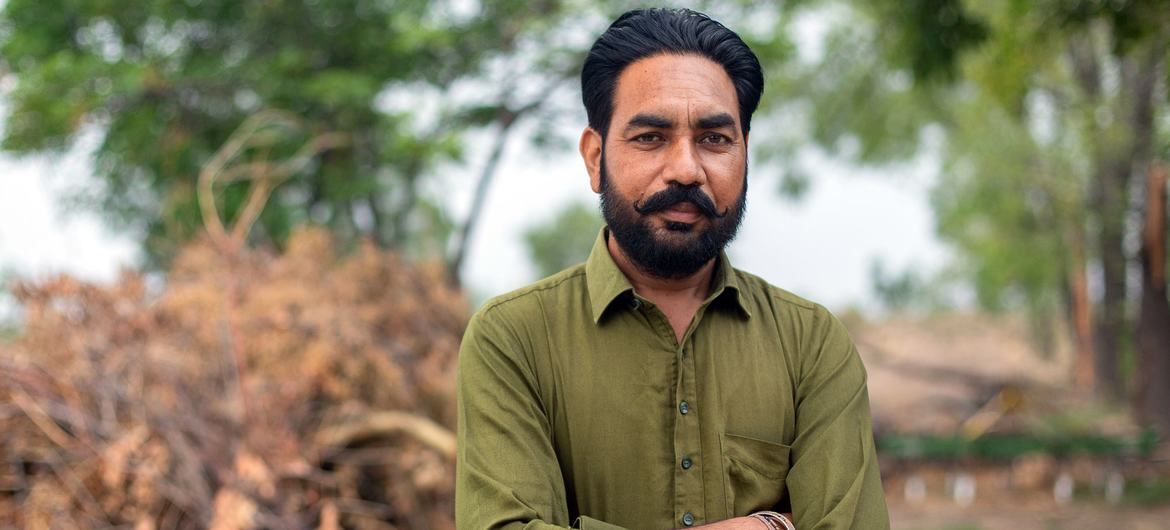
Amandeep Singh, landowner and farmer.
‘Not just a problem for future generations’
Amandeep Singh: Ten years ago, the groundwater here was between nine and 12 metres deep, while today it is found between 18 and 21 metres.
We very much rely on groundwater, as we only have access to canal water once a week, which is not sufficient for us.
Every year, we have to dig deeper to reach the groundwater. This is not just a problem for future generations, but something we experience today already. Reaching the groundwater is very expensive, but we landowners have no choice.
Because of the reduced groundwater level, not only landowners, but everyone will face losses. We will no longer have water for farming or drinking. Without it, there will be no farming, and therefore no future for landowners.
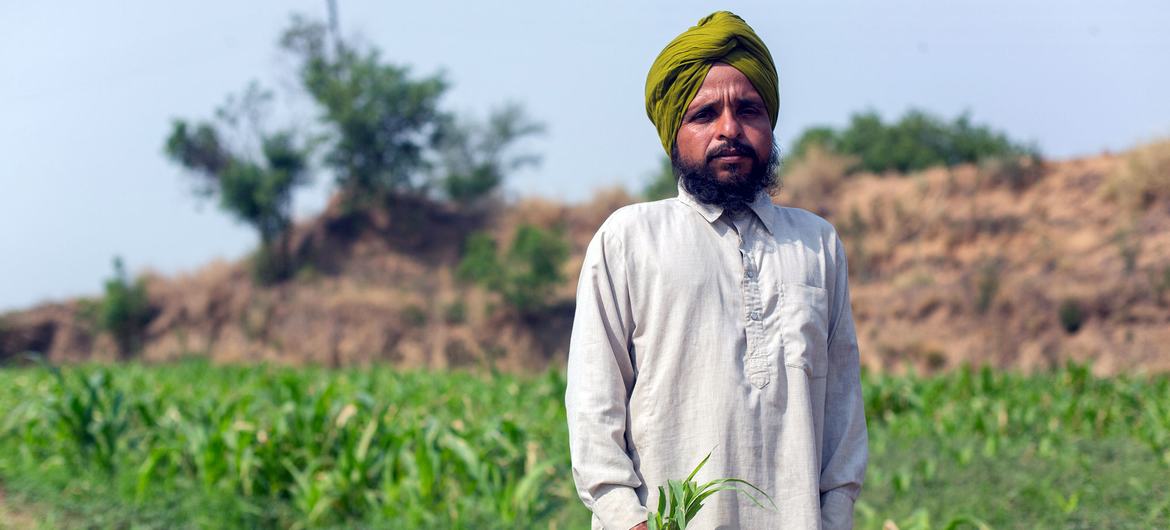
Harjeet Singh
Harjeet Singh: The groundwater we use for our paddy fields is not being recharged from above. However, without rains, we have to use groundwater, as canal water is not available here.
Seven to eight years ago, we could reach groundwater at 4.5 metres deep, while now it is only reachable at 21 metres. The declining water level affects my income, and I cannot afford to install a borewell.
It would be devastating if the groundwater disappears, and it is important that the world understands our issue, as only then something can happen. One person alone cannot do anything. Only when we come together and make a collective effort something can change.
Before the groundwater becomes unreachable or runs out completely, we will have to save rainwater in lower places. For now, there is no other solution.
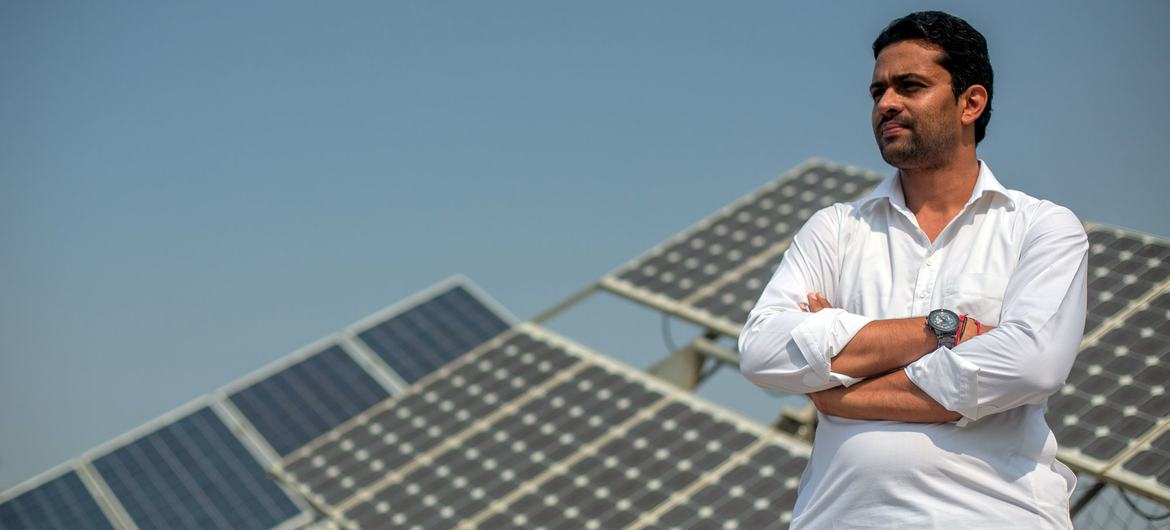
Vishvajeet Singh Jyani
Vishvajeet Singh Jyani: Over the years, we have noticed that the rainfall and weather patterns have been quite erratic. The canal water and groundwater we depend upon has also become unreliable.
At our family farm, the main motto is, “traditional wisdom with modern technology”. My father was also a farmer and used many traditional techniques. I completed an education in computer studies, and together we have combined our core strengths by integrating traditional techniques with modern research and technologies to implement good management of natural resources.
The main water source we are provided with is canal water that comes from the Harike wetlands and the Satluj River. We store that water by using our water management system, or we put it in the field. Sometimes, we have to supplement it with groundwater.
The integrated water management system is very important to us because it helps us to save water when it is not required in the field. It functions as a back-up system which supplements our canal water and groundwater.
If there is excess rainfall in the field, we store that as well. Whenever we experience drought-like conditions we can use it to water our land.
We have done much to help the groundwater recharge and are currently very happy that we can reach it between three and six metres.
When groundwater becomes scarce and reaching it goes beyond the possibilities local farmers have, the state and central government will step in. They have already developed plans and have, in some states, even implemented those. Farmers are being incentivized to plant crops other than rice and equally water-guzzling crops.
If you want farmers to save groundwater, simply telling them to preserve it does not work. If they get incentives to plant other crops, farmers will need no convincing. As farmers are the backbone of the country, if they follow suit, society will follow.