
“Stronger legislation can help deter potential and repeat offenders and expand the range of investigative tools and resources for law enforcement to stop crimes that affect the environment,” said Angela Me, Chief of Research and Analysis at the UN Office on Drugs and Crime (UNODC), presenting the report.
Launched in Vienna, ‘The Landscape of Criminalization’ is Part One of the first-ever Global Analysis of Crimes that Affect the Environment report. UNODC examines how all 193 UN Member States define crimes against nature and the punishments they set for violating environmental laws.
Serious violations
The study covering nine areas of nature-related offenses – deforestation and logging, noise pollution, fishing, waste management, wildlife protection, and pollution of air, soil, and waste – established that no less than 85 per cent of UN Member States criminalize offenses against wildlife.
At least 45 per cent of countries impose penalties of four or more years in prison for some environmental offenses, categorizing them as “serious” crimes under the UN Convention Against Transnational Organized Crime (UNTOC), a universally recognized standard.
“Our review shows progress globally in advancing environmental protection laws,” said Angela Me. However, she noted that legislation and enforcement remain uneven, creating “opportunities for criminal groups to exploit gaps in responses.”
Wildlife and waste are the areas where most countries (164 and 160, respectively) include at least one related criminal offense in their national legislation. In contrast, soil and noise pollution (99 and 97, respectively) are the areas where the fewest countries have criminal provisions.
Regional variations
The level of criminalization and penalties varies by country and region. For example, in Oceania, 43 per cent of countries regard illegal fishing as a serious crime (resulting in four or more years in prison), whereas in Europe, only two per cent of countries classify it as such. Meanwhile, 12 out of 18 countries in Eastern Africa consider wildlife offenses to be serious crimes.
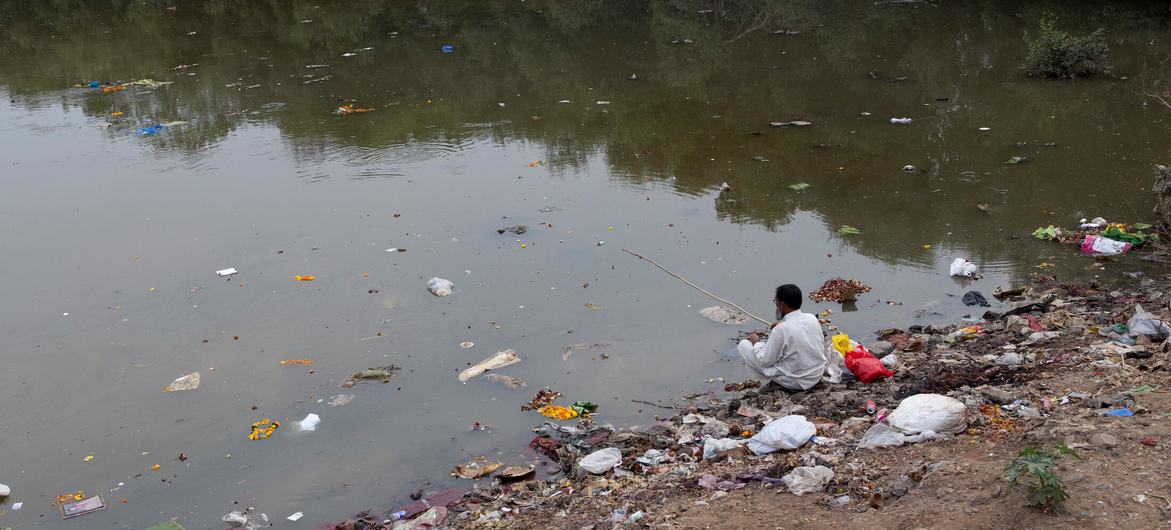
A man fishes on the banks of the Mithi River in western India that has become an open dump for sludge oil and hazardous chemicals.
Africa and Asia have the highest average percentage of Member States with penalties meeting the serious crime definition, indicating that the legislation is not necessarily weak but that there is a lack of enforcement.
Wildlife crime
Of the nine areas surveyed, offenses against wildlife are most frequently covered by criminal legislation, with 164 Member States maintaining such provisions.
Many countries’ national legislation even exceeds the requirements of CITES, the international convention regulating the transboundary trade in endangered species.
Globally, wildlife crime penalties span from a few days to life in prison, while fines can range from a few US dollars to three million.
Next to wildlife, crimes related to waste are highly criminalized, with 160 countries considering improper waste dumping a crime and including at least one related criminal offense in their legislation.
In contrast, soil and noise pollution are the least protected, with only 99 and 97 countries, respectively, considering these violations serious.
Legislative gaps
The report highlights discrepancies in how laws are applied to individuals versus enterprises, with businesses often getting away with fines, while individuals may face imprisonment.
The authors suggest that countries could improve legislation to allow for the confiscation of means used to commit environmental crimes or proceeds from these offenses. The current lack of such provisions often leads to the prosecution of minor offenders rather than the large economic players committing environmental crimes.
According to the UNODC experts, there are several areas for improvement in environmental legislation and penalties. Member States could consider increasing penalties and expanding the use of international cooperation tools such as extradition or mutual legal assistance.
There is also a need for more data collection on these crimes, better enforcement of legislation, and more research on the penalties administered and their effectiveness, they said, adding that such information will help in understanding which extents of criminalization are most effective in preventing environmental crimes.