
The UN’s Sustainable Development Goals (SDGs) set global targets that can only be described as lofty — ending poverty and hunger, achieving gender equality, providing clean and affordable energy for all, and more. The question of how to achieve these ambitions is a big one on a lot of people’s minds.
Partnerships will be key. The UN already recognizes this, with SDG 17 calling for “multi-stakeholder partnerships” to support achievement of the SDGs, especially in developing nations. A handful of global platforms have also been established to accelerate partnerships amongst businesses, governments and civil society, including Partnering for Green Growth and the Global Goals (P4G), IDH the Sustainable Trade Initiative and the UN’s 2030 Agenda Partnership Accelerator.
But the question remains: What do these partnerships need to do in order to be transformative?
What do Transformative Solutions Look Like?
Transformation is admittedly a buzz word right now. While definitions of transformation abound both in the literature and among partnership experts, at their heart, transformative solutions are designed to:
1. Address systemic problems.
Many problems framed by the SDGs, such as environmental degradation and lack of energy access, are inherently complicated. There are multiple underlying issues and barriers that contribute to the problem, such as policies and institutions, relationships and power dynamics, and cultural factors and perceptions. Additionally, any given solution cannot guarantee delivery of a specific outcome. Transformative solutions themselves do not have to be complex, but they tend to focus on systemic problems and remove barriers that hold the problem in place.
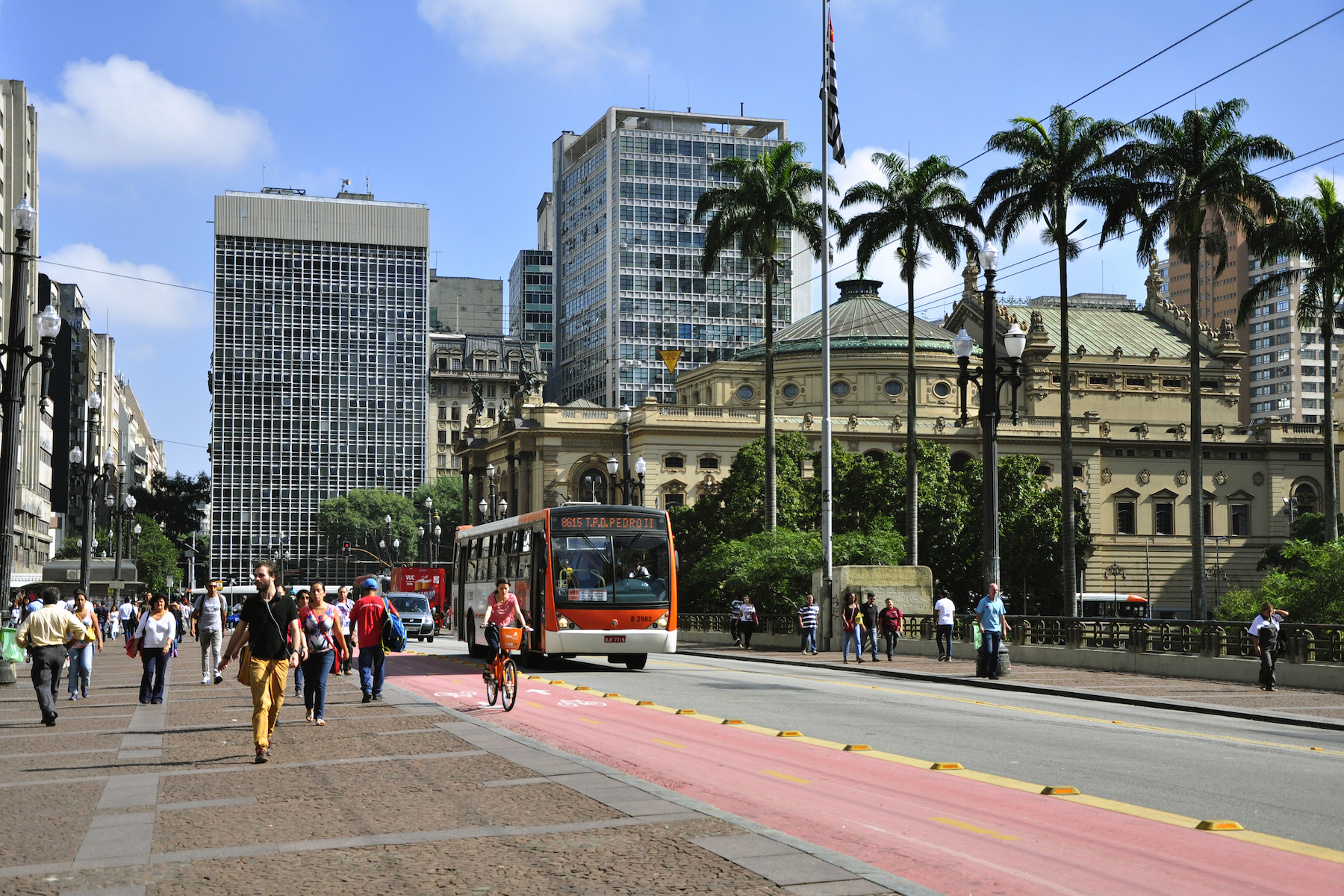
One of P4G’s partnerships, the Zero Emissions Bus Rapid Accelerator (ZEBRA), is doing just that in Mexico City, São Paulo and Medellin. In its aim to transform the public bus system from diesel to electric buses, the partnership has identified three underlying barriers to electric bus deployment: 1) limited understanding of business models for bus operations; 2) limited research on financing options; and 3) lack of financing for e-bus technology. ZEBRA is addressing these issues by identifying existing e-bus models that have overcome these challenges, and adapting the models to the project’s cities of interest. For instance, the partnership has looked to Santiago, Chile’s innovative approach in which bus operators run the e-bus transit system, but the buses themselves are owned by the power utility. This eliminates the need for up-front capital, the traditional burden of entry for bus operators. The power utility also wins because it provides a stronger energy grid (using wind energy) than a traditional bus owner could. It is also able to charge the buses at night when power loads are low.
2. Change the status quo.
Transformative solutions recognize that a key barrier to complex problems is that societies, governments, businesses and institutions are often working on an established pathway with ingrained behaviors. Disrupting the status quo can mean shifting power dynamics and gaining cultural acceptance for a totally new behavior.
This year’s 2019 P4G State of the Art Partnership Award winner, Women’s Livelihood Bond Series, is a great example of a partnership that aims to change the status quo in terms of how women are viewed and valued in society. The partnership recognizes that women across Southeast Asia are particularly vulnerable to climate change, and are oftentimes excluded from economic activities and prevented from living a dignified life. The project addresses these issues by improving women’s access to affordable credit, insurance, markets and agricultural inputs and energy. The Bond is an innovative financial instrument that provides private capital to microfinance institutions and social enterprises, who in turn help low-income women build credit histories and transition from subsistence to sustainable livelihoods. The first Women’s Livelihood Bond was the world’s first impact investing instrument, and the first financial instrument to be listed on a stock exchange. It has raised $8 million in private capital to empower 385,000 women across Southeast Asia.
3. Sustain impacts.
Transformative change must be long-lasting. That means a partnership must be able to continue without philanthropic or development funding. One of the ways to consider this is through commerciality and creating a market where there currently isn’t one.
P4G’s 2018 partnership, Energise Africa, is an excellent example of this. The partnership is focused on improving access to electricity for low-income households in Africa. Energise Africa allows ordinary individuals to invest in fixed-term bonds issued by solar companies, who then provide pay-as-you-go solar home systems to families across Africa. By offering an investment opportunity with support from the UK Department for International Development, as well as a guarantee on offer – up to $130 of capital invested for first-time investors – the partnership has been able to raise nearly $14 million in loans for businesses selling solar home systems in Africa. Expected annual returns have ranged on average from 5% to 7%.
Partnerships to Achieve the Sustainable Development Goals (SDGs)
These are just a few examples of how partnerships can be transformative. We’re currently investigating how partnerships can drive SDG impact as part of WRI’s inaugural State-of-the-Art report on multi-stakeholder partnerships, which will be released in 2020. This report is part of a biennial series on partnerships, which aims to advance knowledge around the design of successful multi-stakeholder partnerships and their contribution to the SDGs.
As we progress in our research, we welcome any comments from practitioners and researchers similarly interested in transformation and partnerships. Contact Erin Gray or Serena Li for more information.

